
Costa Blanca
You find Calpe on the map by looking for the rock. Peñón de Ifach is visible from the motorway, from the beach in Altea and from the plane on the way down, and it’s the reason most people come once. What decides whether they come back is everything underneath it.
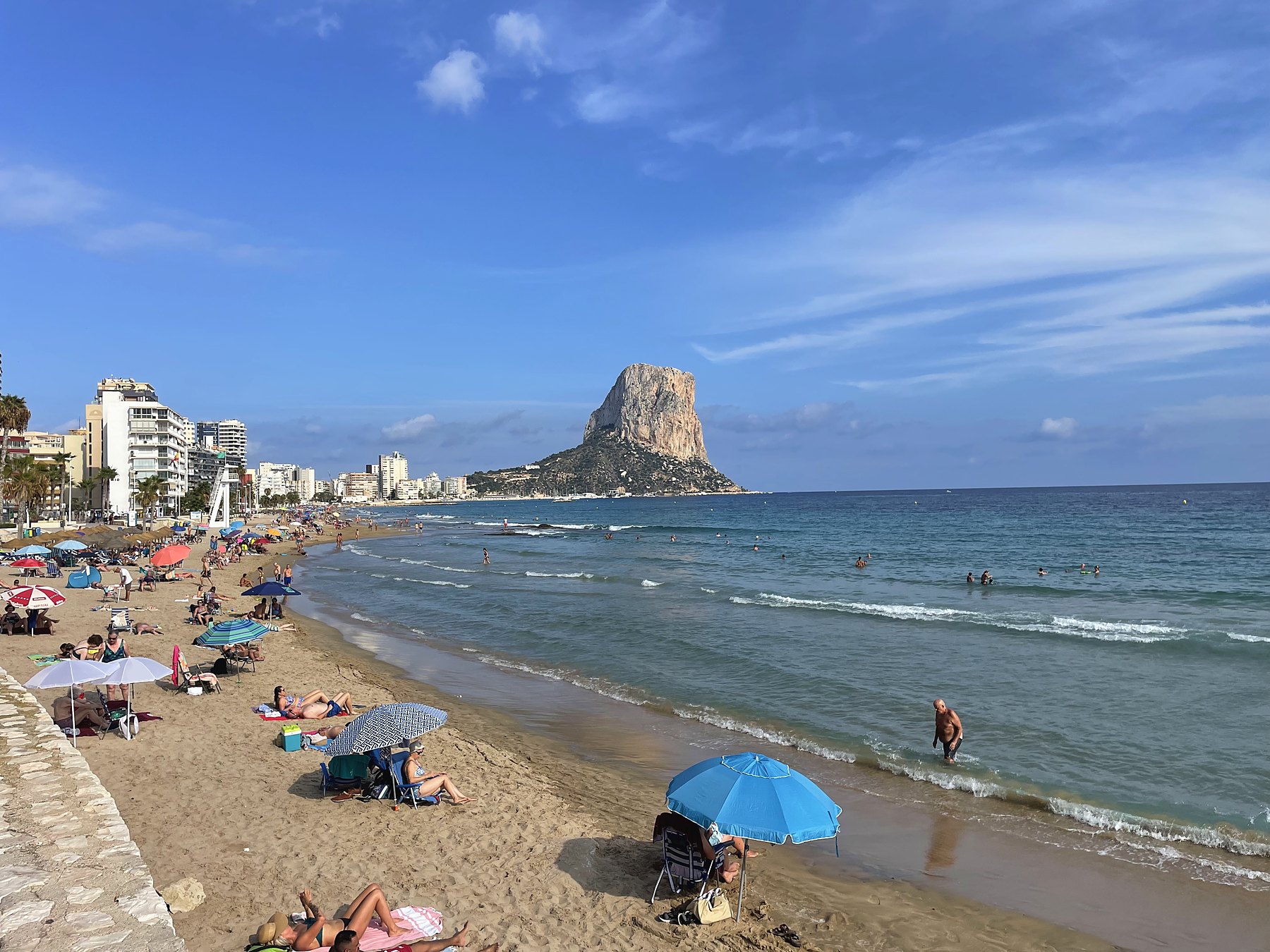
The rock everyone photographs and far fewer actually climb
Peñón de Ifach is a 332-metre limestone block that drops straight into the sea, and the whole thing is a natural park. It looks like something you knock out before lunch, and that is exactly where people get caught. You have to book in advance, only 300 people a day are let in, and the booking window opens ten days ahead. It is free, it goes through the Generalitat Valenciana natural parks site, and it gets checked at the tunnel. No booking, no entry.
The route is around five kilometres there and back with about 300 metres of climbing, which sounds harmless. The first half, as far as the tunnel, is a walk. Past the tunnel the ground turns to polished limestone that is slippery even when dry, and flip-flops or smooth-soled trainers have no business up there. And here is the part that catches families out: park rules do not allow anyone under 18 past the tunnel to the summit. Kids get as far as the tunnel and turn around.
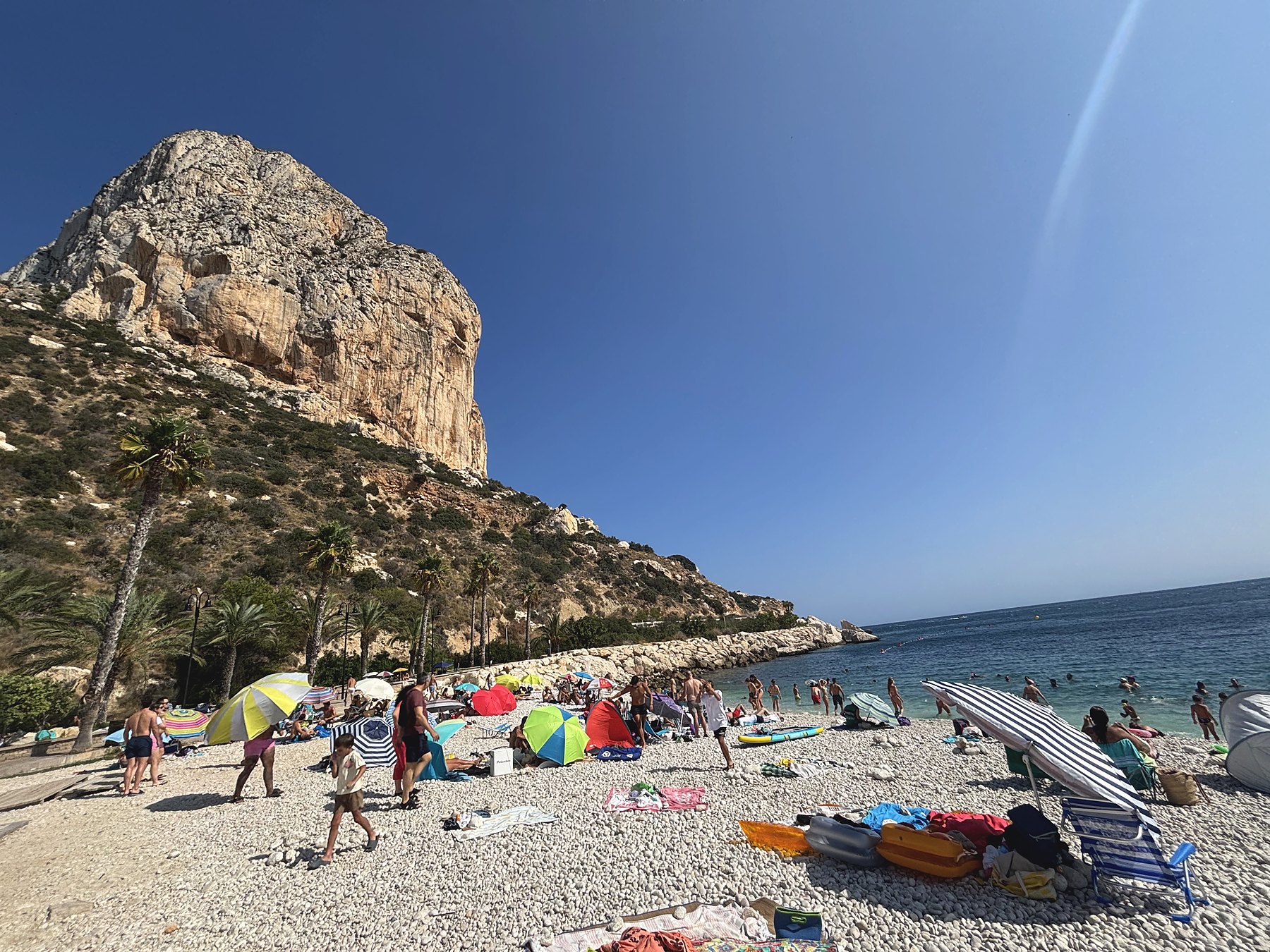
Two beaches with a rock between them
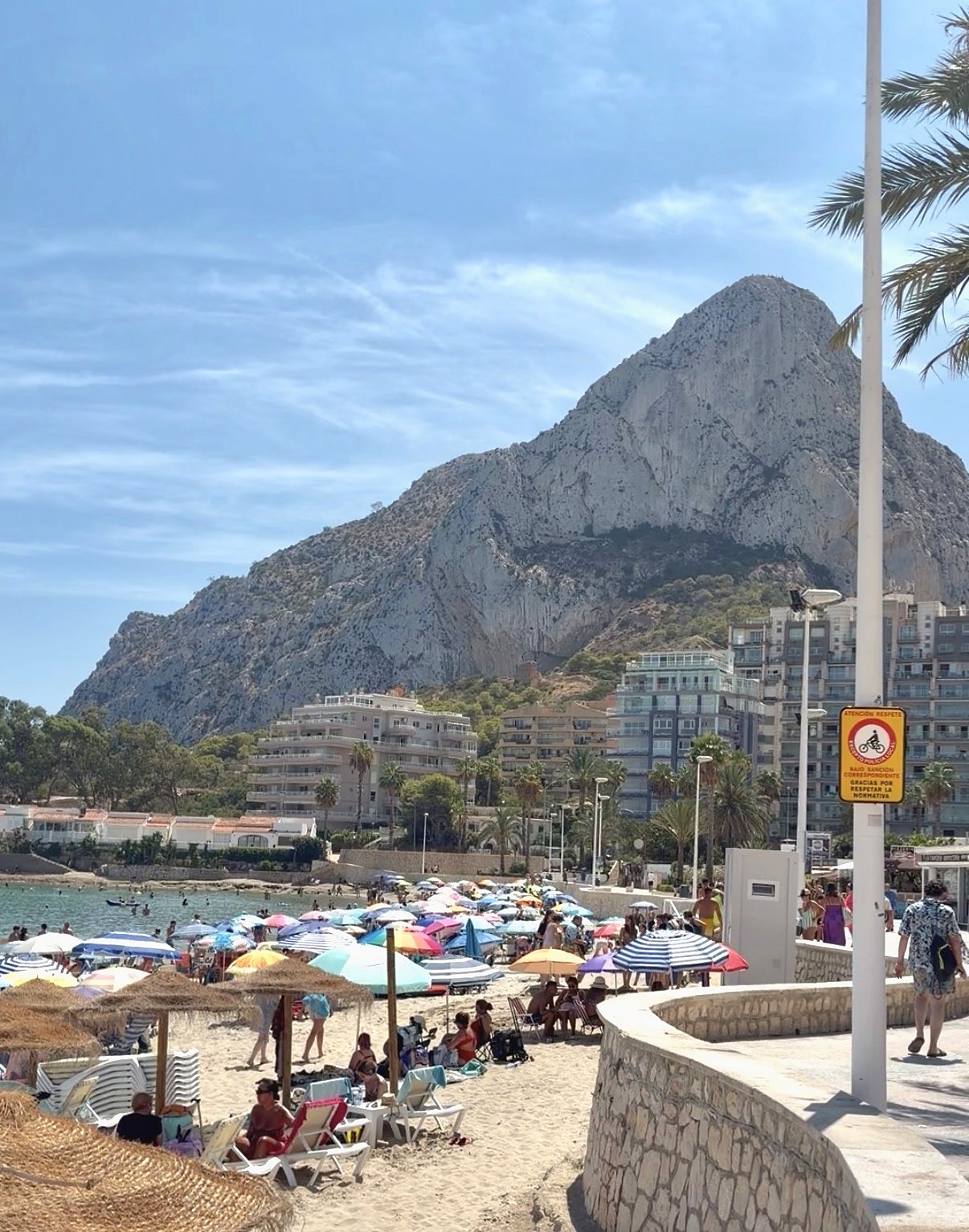
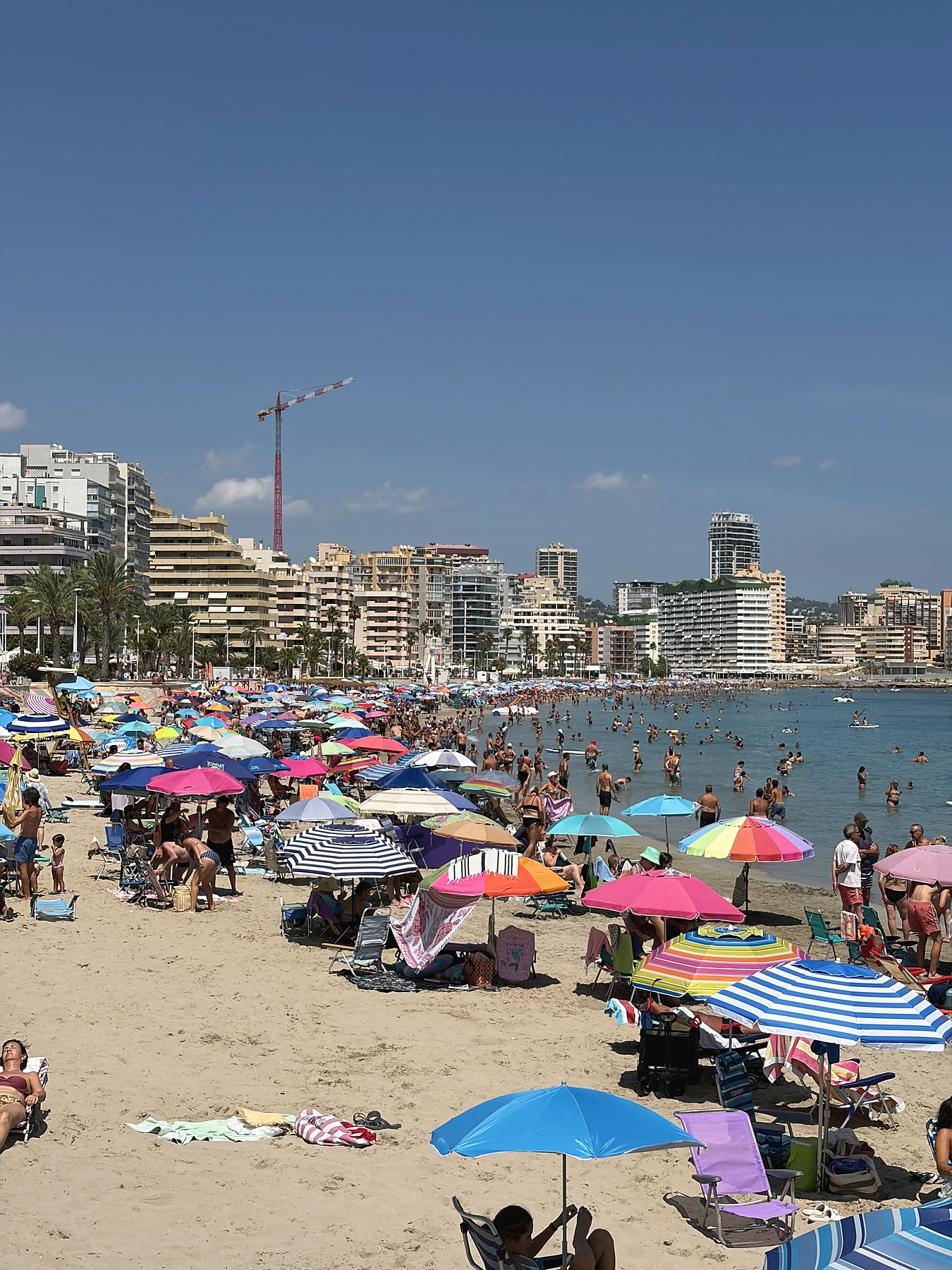
South of the rock is Playa del Arenal-Bol, the town beach, with a promenade running right below the old town. North of it is Playa de la Fossa, wider and newer, with a row of towers behind it. Between them, next to the port, sit two small coves: Cala del Racó, pebbly, with a marked snorkelling trail, and Cantal Roig. In 2026 Calpe took five Blue Flags at once, two of them for the first time, while La Fossa held on to its own for the thirty-ninth year running.
The difference between the two is the same one Benidorm has, on a smaller scale: town and life on one side, hotels and quiet on the other. Which side of the rock you sleep on is not a detail, and it is not something you can work out from listing photos. When I am booking accommodation for someone, it is the first thing we settle.
Flamingos in the middle of town
A few minutes back from the beach are Las Salinas, forty-one hectares of salt lagoons worked from Roman times until 1988. They have been protected since 1993, and what is left is a nature reserve ringed by apartment blocks. The loop around them is just under four kilometres, completely flat, on paths with wooden hides, and it takes about an hour.
Over 170 bird species have been recorded here, but people come for one. Flamingos are present year round, and from May to August there can be several hundred of them. It is free and nothing needs booking. The picture takes some getting used to: pink birds, a block of flats behind them and the rock above it all.
Roman fish tanks at the end of the beach
At the far end of the Arenal, in a bay sheltered by the rock, are the Baños de la Reina. The name says the queen’s baths, but they are Roman tanks cut into the sandstone at water level and used for farming fish. The sea still runs through them, and from the shore they read as a set of shallow pools that nobody would guess were carved almost two thousand years ago.
On land there is a whole complex behind them: houses and baths from the first and second centuries, a villa with private baths from the third, and a church with a baptistry from the fifth. You walk it on marked paths, you can swim a few steps away, and most people on the beach have no idea what they are lying next to.
The port at five in the afternoon
Calpe is still a fishing town and you can check that any weekday. The fleet comes in during the afternoon and the fish auction starts inside the lonja at around five, running for about two hours. It is not a show put on for visitors, it is a market where the buying is real. The public watches from a raised walkway inside the hall.
If you want the sea outside of a plate as well, the Príncipe de Asturias ecological path runs from the port around the base of the rock. It is a short stretch along the edge, with the walls of the Peñón dropping vertically into the water above you and gulls, cormorants and peregrine falcons nesting in them. Ten minutes end to end, and it is the best view of the rock you will get without climbing it.
The old town is a different town
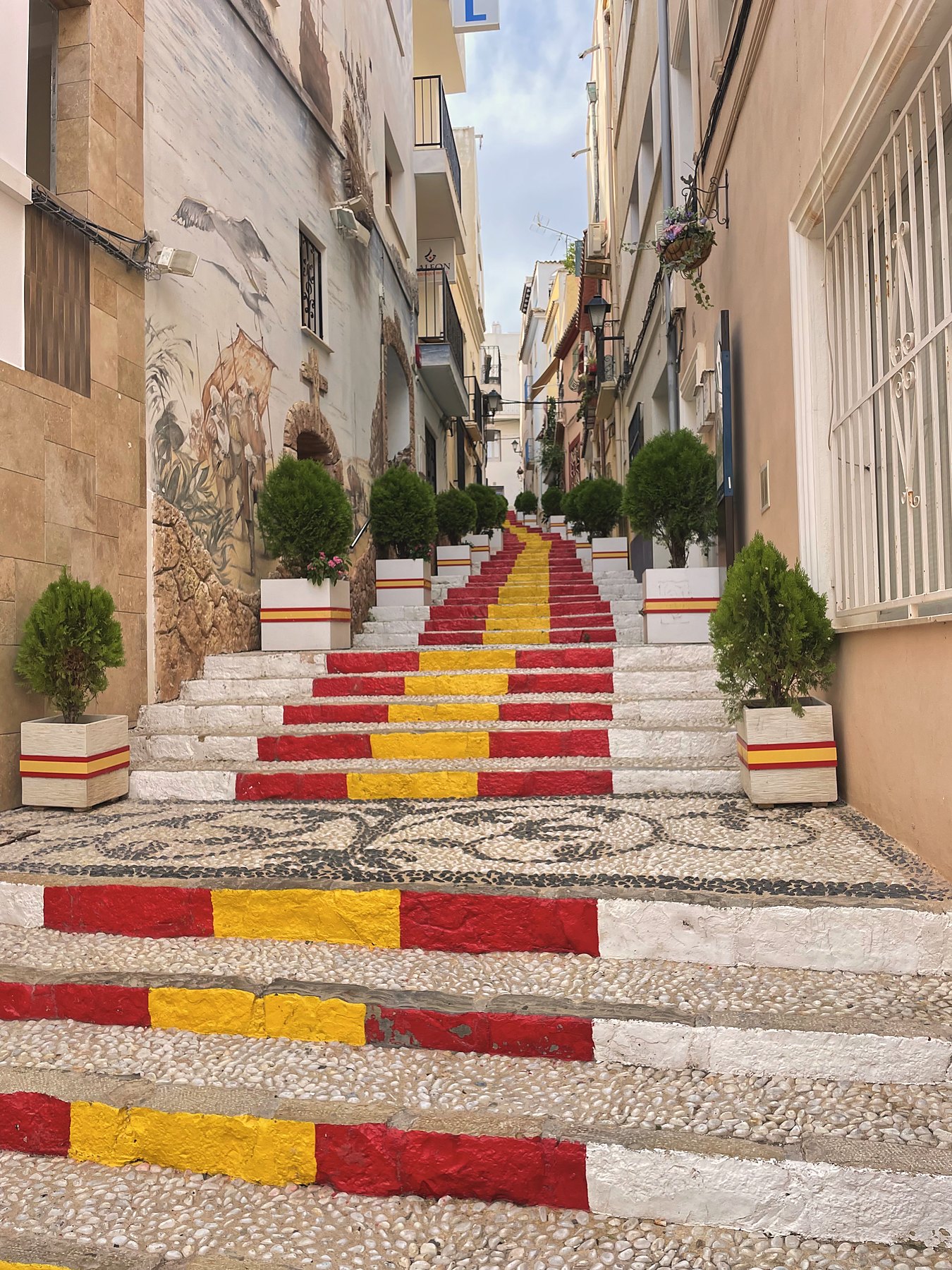
Above the Arenal is the casco antiguo, and it has almost nothing in common with the beach. Narrow lanes, painted staircases, murals and flowers in the windows, all of it at a scale the Costa Blanca has lost nearly everywhere else. You get there on foot and uphill, which puts off a fair share of the beach.
The town was walled because it had to be. Pirates came for centuries, and the raid of 22 October 1744 was bad enough that Calpe built a second wall around the suburb afterwards. Not much of that survives, and the Torreó de la Peça watchtower came down in the twentieth century. What did survive is the biggest fiesta of the year, the Moros y Cristianos every October, staged around that exact attack.
A day trip from Alicante, or a base of its own
Calpe is 77 kilometres from Alicante airport, about an hour by car on the AP-7, which makes it a comfortable day trip and an easy week. The ALSA bus from Alicante takes around an hour and a half for roughly eight euros. The tram is the cheapest and the slowest: L1 to Benidorm, change to L9 towards Dénia, thirty-six minutes on to Calpe, and over two and a half hours all in. The station is another two kilometres out of the centre, so factor that in.
Which is why a hire car earns its keep here more than it does in Benidorm. Altea is twenty minutes away, Moraira and Jávea half an hour, Guadalest just under an hour. Calpe also works as a base for anyone who does not want to sleep in Benidorm but does want to be able to drop in.
The rock is what gets people to Calpe. Whether they come back is decided by everything underneath it.
And what Calpe isn’t
It isn’t an untouched fishing village. A solid row of towers runs the length of La Fossa, and in August the beach is as full as anywhere else on this coast. And La Muralla Roja, the red and blue Ricardo Bofill building from 1973 that you have seen on Instagram, is a private residential block of fifty apartments. You can’t go in, it isn’t an attraction, and people who turn up with a camera leave disappointed.
And once more about the rock, because it’s the disappointment that comes up most. No booking, no Peñón. With anyone under 18, no summit at all. And in flip-flops you shouldn’t even be trying. I’m saying this on purpose. Better to know it in advance than find it out once you’re here.
Who Calpe is for
Calpe in short
Not sure whether Calpe is your kind of place, or Benidorm is?
I know the Costa Blanca from Dénia to Mar Menor, and Calpe out of season too. Tell me who you’re travelling with and what you want from the trip, and I’ll tell you straight — whether Calpe will suit you, or whether you’d be happier somewhere with more going on.